Building Knowledge Through Academic Partnerships
In an increasingly interconnected world characterised by complex social challenges, academic partnerships have become indispensable to the advancement of the social sciences.
When I reflect on my own journey as a Sociologist, I realise that academic partnerships have been central in contributing to the scholar I have become. Every significant milestone in my career has, in one way or another, been shaped by such academic partnerships.
The cornerstone of this partnership is academic networks I created, specifically at academic conferences. My understanding is that conferences are far more than platforms where I present research papers; they are spaces where I build relationships, establish networks, and initiate future collaborations. Through participation in national and international conferences, I have had the privilege of interacting with scholars from different institutions and countries whose expertise has enriched my own work. Some of the scholars I met later became collaborators, reviewers, moderators, and external examiners. Likewise, I have had opportunities to support colleagues by serving similar roles within their institutions. These reciprocal relationships strengthen academic quality assurance and remind us that academia thrives on trust, collegiality, and mutual support.
I have therefore developed such meaningful relationships with academics I encountered at various conferences; this include South African Sociological Association (SASA) conference, which I attend annually. My experience with this conference has been remarkable since I first attended it in 2013 as an Honours student, accompanied and encouraged by my then supervisor. Since then, I have participated in the conference every year until recently and have developed strong partnerships within the Sociology community. Over time, these relationships have translated into various leadership and service roles within the association. I serve as a SASA Council member, chaired conference sessions, and acted as a book respondent.

Through SASA, I have built academic partnerships with colleagues across different institutions. These networks have further resulted in collaborative research and co-authored publications in DHET-accredited local and international journals. I have come to appreciate that collaboration among scholars is invaluable because we bring different expertise and disciplinary perspectives to address complex social issues. The richness of our scholarship is often enhanced through these collective efforts.
Through these networks I have built, I have also developed partnerships with academics from other universities with whom I am currently exploring opportunities for inter-institutional co-supervision of postgraduate students. Such collaborations enable us to contribute complementary disciplinary expertise to strengthen students’ research projects while broadening their academic exposure and support systems.
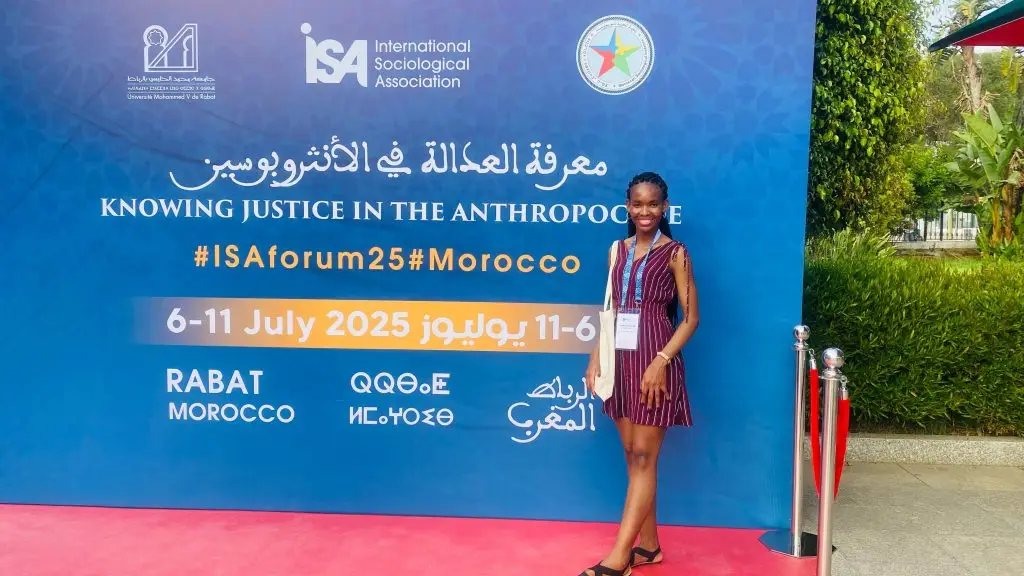
Beyond SASA, I regularly participate in International Sociological Association (ISA) conferences. Presenting my work at ISA conferences recently in Australia in 2023 and Morocco in 2025 not only enhanced the visibility of my scholarship within international Sociological communities and positioned my research within broader global conversations, but also created valuable opportunities to establish international partnerships and collaborations. These experiences reinforced my appreciation for the importance of engaging with scholars beyond national borders and learning from diverse intellectual traditions.
I also regularly attend conferences organised by the South African Association of Public Administration and Management (SAAPAM). My experience with SAAPAM has been equally enriching. I realised that it was important not only to attend conferences within my own discipline, such as SASA and ISA, but also to participate in conferences beyond sociology. Through SAAPAM, I was able to bring my Sociological perspective into public administration spaces, engage meaningfully with scholars from other disciplines, and establish interdisciplinary collaborations. These interactions expanded my understanding of governance issues and demonstrated the value of crossing disciplinary boundaries.
Academic partnerships have also opened doors for me to research projects and collaborative publications. This is evident in my contribution to flagship studies conducted through the Human Sciences Research Council (HSRC). This includes projects like “Gender Mainstreaming Strategy”, and “HIV prevalence and associated factors among adolescent boys and young men in South Africa: 2017 nationally representative household-based population survey”. We have also collaborated on writing policy briefs, this include “Gender mainstreaming as a strategy for achieving the Sustainable Development Goal no. 5 on Gender Equality, (2025)”. “The role of the National Gender Machinery (NGM) in strengthening gender mainstreaming in South Africa, (2025)”. “Towards strengthening collaborations between government and civil society for effective gender mainstreaming implementation, (2025)”. Collaborating with teams of scholars from diverse disciplinary backgrounds on these projects directly supported evidence-based policymaking and institutional transformation in South Africa. It also exposed me to the realities of conducting large-scale policy-oriented research that has tangible societal impact.
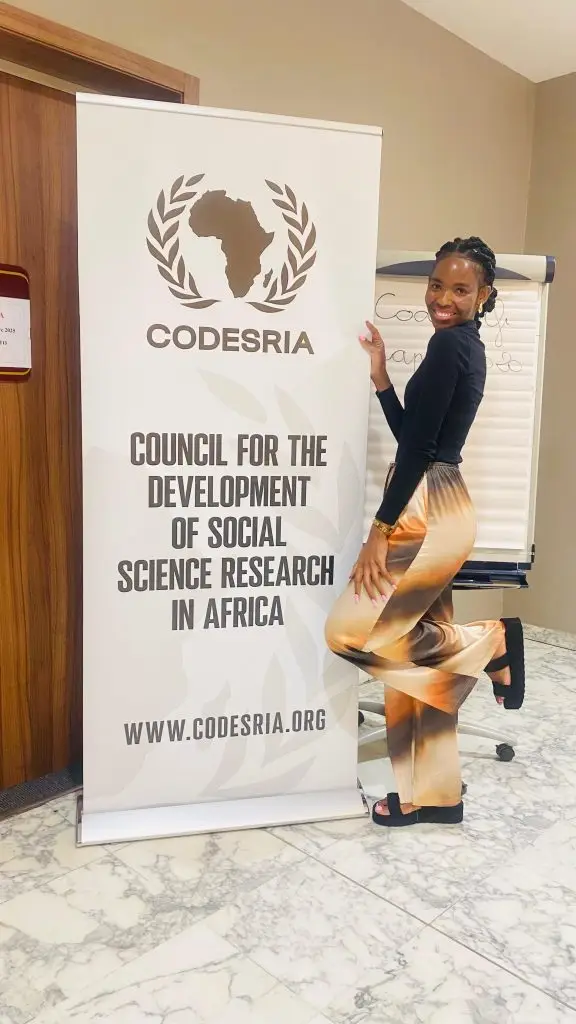
Another collaborative project that I am involved in which emerged through the meaningful academic networks, is a continental partnership through a CODESRIA-funded project under the Meaning-making Research Initiatives (MRI) programme (2025–2027). This initiative forms part of broader efforts to increase the participation and visibility of female scholars in the work and life of CODESRIA. The funded project, titled “Online Gender-Based Violence and Democratic Governance: Cyberbullying against Women in Politics in Nigeria and South Africa,” brings together South African and Nigerian scholars from different disciplines, including Sociology and Political science. Working within this interdisciplinary and cross-national team has further reinforced the importance of partnerships in generating comparative insights and addressing issues that transcend national boundaries.

Collaborating on various projects has further exposed me to interdisciplinary teams and taught me that robust social science research requires diverse expertise. The most meaningful solutions to contemporary social problems rarely emerge from isolated disciplinary perspectives. Rather, they are produced through dialogue, collaboration, and the willingness to learn from others.
Through these valuable academic partnerships, I have also been able to identify colleagues who later served as external examiners, moderators and reviewers. Equally, I have had opportunities to reciprocate by serving similar roles for them. Journal editors and book editors within my academic circles regularly invite me to review manuscripts for both local and international peer-reviewed journals. Similarly, scholars from different institutions within my network often request that I serve as an external examiner for their postgraduate research or as an external moderator for their final-year undergraduate and Honours modules. I do the same when seeking appropriate expertise for my own institution. Through these reciprocal roles, we contribute to safeguarding academic standards, strengthening quality assurance processes, and supporting the development of emerging scholarship. These engagements clearly illustrate the value of academic partnerships.
Finally, with the upcoming 13th International Conference on Social Sciences 2026 (ICOSS 2026), I believe I will continue to build meaningful partnerships with social scientists from different disciplines and regions of the world. My collaboration and involvement as a Country Coordinator for ICOSS 2026 has already begun to expand my academic networks and visibility.
Therefore, looking back, I can trace many of the defining moments of my academic journey to partnerships. These experiences have convinced me that the future of the social sciences depends not on working in isolation, but on our willingness to collaborate, share knowledge, and invest in one another.
by,
Dr Karabo Mohapanele
Senior Lecturer
University of Zululand
South Africa