
Special Events
Pre-Conference Workshop

Prof. Luke Rose
Director of the Institute of Transport and Logistics Studies (Africa),
College of Business & Economics, University of Johannesburg.
Bio
Rose Luke is a transport economist with a doctoral degree from the University of Johannesburg. She is the director of the Institute for Transport and Logistics Studies (Africa) at the University of Johannesburg, a lecturer and supervisor, a published author, has participated in numerous peer reviewed conferences, is a frequently invited speaker at industry forums, on the editorial board of the International Journal of Logistics Management, an associate editor of the Journal of Transport and Supply Chain Management, and a peer reviewer for a number of prestigious journals. Her current research focuses on transport, logistics and supply chain matters as they impact social equity and sustainability.
Workshop on "Selecting the right journals and structuring articles for publication"
- Date: 25th March 2026
- Time: 13.30 – 14.30 p.m. IST
Topic Overview:
Selecting the right journal and structuring your article effectively are crucial steps in the academic publication process. A well-chosen journal enhances the likelihood of acceptance and ensures your research reaches the right audience. Similarly, a well-structured article improves readability, clarity, and overall quality, helping it make a greater impact. This session will guide you through the process of identifying suitable journals and provide insights into organizing and writing your article to meet publication standards.
Key Takeaways:
- Choosing the Right Journal
- Structuring Your Article
- Tips for Increasing Acceptance Rates
- Engaging with the Peer-Review Process
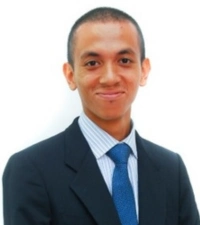
Dr. Ahmad Fahim Zulkifli
Department of Physical & Health Education / Centre of Risk Management
Faculty of Education, Universiti Teknologi MARA (UiTM), MALAYSIA.
Bio
Dr. Ahmad Fahim Zulkifli is a highly experienced academic in the field of physical and health education, with a strong focus on integrating technology into education. He holds a Bachelor of Science (Hons.) in Sport Science and Physiology from the University of Leeds, a Master of Education in Physical Education from Arizona State University, and a PhD in Health Education and Promotion from Universiti Teknologi MARA (UiTM), Malaysia.
His doctoral research developed new norms in physical and health education (PHE), specifically focusing on the integration of movement analysis applications and smart devices to enhance learning and feedback in sports skills. Dr. Zulkifli is passionate about creating inclusive and dynamic learning environments, utilizing universal design pedagogy to support students with diverse needs.Currently, Dr. Zulkifli is an active researcher in the intersection of physical education and technology. He is particularly interested in the potential of artificial intelligence in education and its capacity to offer personalized learning experiences.
In addition to his academic contributions, Dr. Zulkifli is deeply involved in various leadership roles at UiTM, including coordinating projects and serving on multiple academic committees. He has also supervised numerous students in research and has received several awards for his research and service, including the “Excellent Service Award” from UiTM. Dr. Zulkifli’s work continues to bridge the gap between physical education, technology, and social inclusion, with the aim of providing practical guidance for educators worldwide.
Workshop on "Tips to Avoid Desk Rejection"
- Date: 22nd May 2026
- Time: 12.30 – 13.30 p.m. IST
Topic Overview:
“Tips to Avoid Desk Rejection” is a crucial session for researchers and academic writers looking to enhance their chances of having their manuscripts accepted for publication. Desk rejection occurs when a submitted manuscript is immediately rejected by a journal’s editorial team without undergoing peer review, usually because it doesn’t meet the journal’s basic requirements or quality standards. This topic provides valuable insights into how to avoid common mistakes that lead to desk rejection and increase the likelihood of successful manuscript submission. It covers key strategies for improving manuscript quality, aligning it with the journal’s scope, and preparing a submission that stands out to editors.
Key Takeaways:
- Align Your Manuscript with the Journal’s Scope and Audience
- Adhere to Submission Guidelines.
- Craft a Compelling Abstract and Introduction
- Ensure High-Quality Writing and Presentation
- Check for Ethical Compliance and Data Integrity

Prof. Jonathan Matusitz
Professor in the Nicholson School of Communication and Media (NSCM) at the University of Central Florida.
Bio
Jonathan Matusitz (Ph.D., University of Oklahoma, 2006) is a Professor in the Nicholson School of Communication and Media (NSCM) at the University of Central Florida. His research focuses on globalization and public communication campaigns, particularly terrorist campaigns, symbolism and communication in terrorism, the globalization of culture, and health campaigns. His research methodologies include thematic analysis, qualitative interviewing, semiotics, and theoretical analysis. On top of having more than 170 academic publications and over 170 conference presentations, he taught at a NATO-affiliated military base in Belgium in 2010. Originally from Belgium himself, he moved to the United States in 2000. Dr. Matusitz has already published 11 academic books by A-rated publishers as a single or first author.
Workshop on "The 10 Steps to Select the Best Journals in the Social Sciences"
- Date: 24th June 2026
- Time: 15.00 – 16.00 p.m. IST
Topic Overview:
Selecting the best journals for publishing social science research is crucial for enhancing the visibility and impact of your work. With numerous journals available, the process can be overwhelming. This topic focuses on the essential steps researchers should follow to identify and choose the right journals that align with their research goals, audience, and academic standards. The process not only involves evaluating journal relevance but also considering factors such as peer review quality, impact factor, accessibility, and submission guidelines.
Key Takeaways:
- Assess the Journal’s Scope and Relevance
- Evaluate the Journal’s Reputation and Impact
- Examine Peer Review Process
- Understand Submission Guidelines and Acceptance Rates
Human Library Session

Distinguished Prof. Steven Ratuva
Conference Chair
Pro-Vice Chancellor
Pacific Director
Macmillan Brown Centre for Pacific Studies
University of Canterbury
The Human Library Session is an interactive dialogue-based platform that brings lived experiences, indigenous knowledge, and leadership insights into meaningful conversation. This session will explore either Global Inclusion Through Indigenous Knowledge, highlighting how indigenous wisdom supports inclusive policies, sustainable development, and social empowerment, or Leadership and Youth Empowerment in a Globalized World, focusing on mentorship, capacity building, and inclusive leadership for social change. Chaired and guided for open discussion, the session encourages participants to learn directly from real-world experiences beyond traditional academic formats.
Related Topics
- Discover the distinguished speakers who will present throughout ICOSS 2026.
- Check the call for papers and submit your research for consideration.
- Learn about registration fees, benefits, and how to secure your spot as Attendee at ICOSS 2026.
- Explore the ICOSS 2026 venue and travel details to plan your visit.
- See important dates and deadlines you should know.
- Find information about the scholarship program that may support you.